


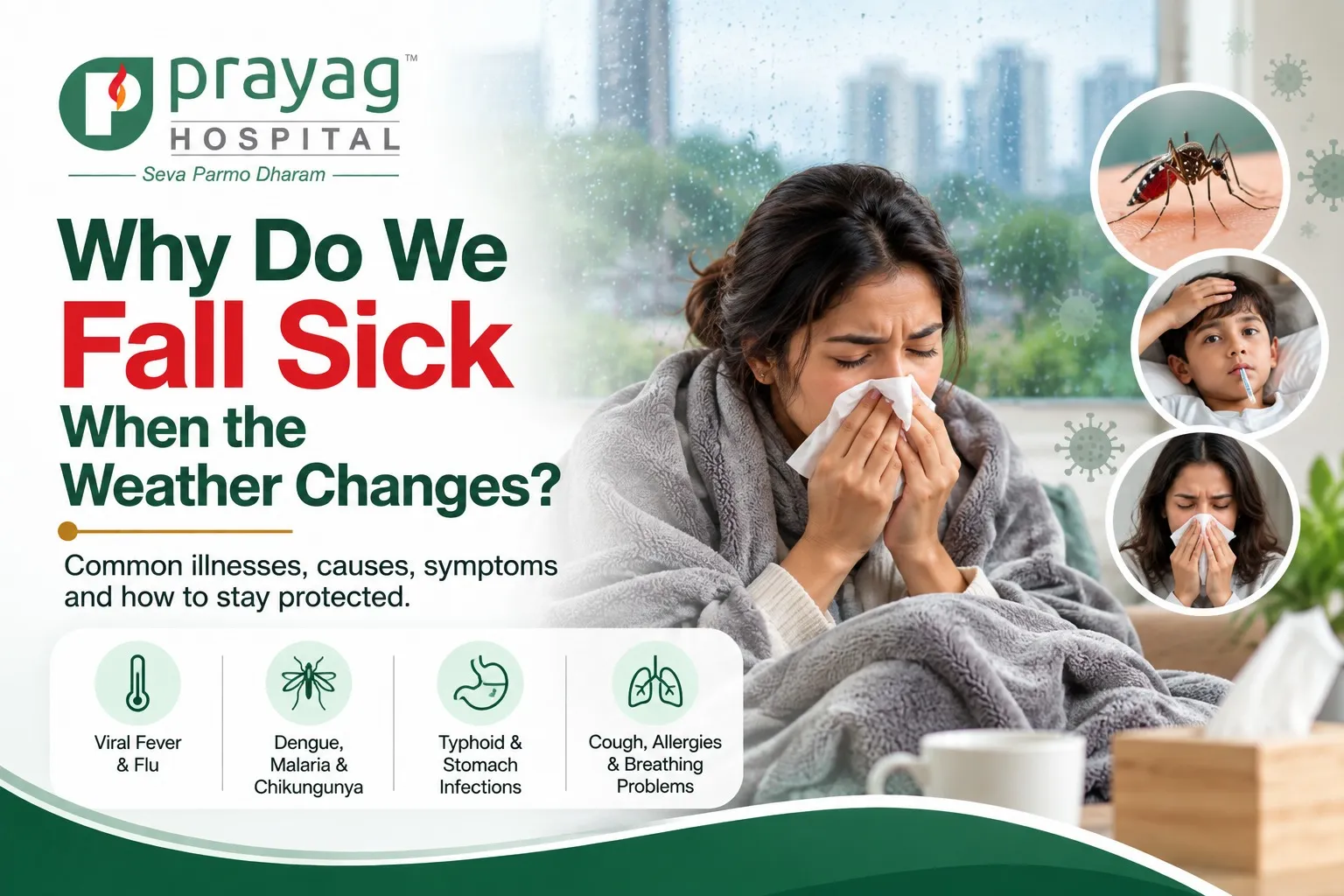
As the monsoon fades and cooler evenings set in, many households start sneezing, coughing and running a temperature. This time of year is one of the busiest for the OPD at Prayag Hospital, Sector 41, Noida, where our doctors see a sharp rise in fever, throat infections, stomach upsets and breathing problems between September and November.
Most seasonal illnesses are mild and get better with rest and simple care. Some, like dengue, need timely diagnosis and close monitoring. Here is what causes seasonal illness, what to watch for, and when a doctor's visit becomes important.
What Makes Us Sick During Weather Change?
The change in weather doesn't cause illness directly. Rather, fluctuating meteorological conditions create an ideal environment for viruses, bacteria, and insect vectors to thrive and spread rapidly:
Temperature Swings
Warm sunny days followed by cool nights make it harder for the body's thermoregulatory and immune defenses to adjust smoothly.
Leftover Rainwater
Stagnant water pools in air coolers, flower pots and construction sites breed mosquitoes that spread dengue, malaria and chikungunya.
Closed Indoor Spaces
Cooler evenings bring people indoors with closed ventilation, where respiratory viruses pass easily from person to person.
Rising Air Pollution
Falling temperature traps pollutants near ground level. Poor air quality irritates the respiratory tract and triggers severe asthma and allergy flare-ups.
Contaminated Food & Water
Lingering post-monsoon humidity and water pipeline seepage raise the risk of waterborne bacterial infections like typhoid and acute gastroenteritis.
Common Seasonal Illnesses to Watch Out For
Knowing the symptoms of common seasonal ailments helps you detect early warning signs and seek timely medical care:
Viral Fever and Flu
This is the most frequent complaint in the OPD, presenting with fever, body ache, sore throat, runny nose, and profound fatigue. Most cases settle within three to five days with supportive care. However, flu can be significantly more serious in young children, older adults, pregnant women, and individuals with diabetes or chronic heart and lung conditions.
Dengue Fever
Transmitted by the Aedes mosquito, dengue typically presents with sudden high-grade fever, severe retro-orbital headache (pain behind the eyes), intense joint and muscle aches ("breakbone fever"), and sometimes a measles-like skin rash.
Malaria and Chikungunya
Malaria often causes cyclical high fever accompanied by severe chills and sweating rigors. Chikungunya causes debilitating joint swelling and pain that can persist for weeks or even months. Because clinical symptoms overlap, a prompt blood test is the only reliable way to differentiate these vector-borne infections.
Typhoid and Stomach Infections
Prolonged fever, persistent abdominal pain, vomiting, and loose motions (diarrhoea) can rapidly lead to electrolyte imbalance and severe dehydration, especially in young children and senior citizens.
Allergies and Breathing Problems
Dust, pollen, and post-monsoon smog irritate hypersensitive airways, triggering incessant sneezing, persistent dry or phlegm cough, and chest wheezing. Individuals with pre-existing asthma or COPD often experience sudden symptom exacerbations.
When Should You See a Doctor?
While many viral illnesses resolve on their own, delaying treatment in serious cases can lead to complications. Consult a physician promptly if you or a family member experience any of the following warning signs:
- Fever that lasts more than 2 to 3 days or keeps rising
- Severe body ache, joint pain, or an unyielding headache
- Persistent vomiting, severe abdominal pain or loose motions
- Red spots on the skin (petechiae), or bleeding from gums or nose
- Breathlessness, persistent wheezing, or chest tightness
- Unusual weakness, drowsiness, or significantly reduced urine output
- In children: poor feeding, excessive sleepiness, or continuous inconsolable crying
Simple Ways to Stay Healthy This Season
Simple, consistent preventive habits can protect your family from most seasonal illnesses:
Stop Mosquito Breeding
Empty and scrub air coolers, flower pots, and open buckets at least once a week. Use mosquito repellents, window meshes, and bed nets.
Stay Well Hydrated
Drink plenty of clean filtered or boiled water, fresh coconut water, and warm vegetable soups to support immune detoxification.
Eat Immunity-Rich Foods
Include seasonal fruits rich in vitamin C such as amla (Indian gooseberry), oranges, and guavas, alongside a wholesome home-cooked diet.
Practise Strict Hygiene
Wash hands frequently with soap, drink only RO-filtered or boiled water, and strictly avoid uncovered street foods and cut fruits.
Protect Your Lungs
Check the daily Air Quality Index (AQI), wear an N95 mask on high-pollution days, and keep your prescribed rescue inhaler accessible if you have asthma.
Get the Flu Vaccine
An annual influenza vaccination is strongly recommended for children, older adults, pregnant women, and people with chronic health conditions.
Avoid Self-Medication: Why It Can Be Risky
Taking leftover antibiotics or over-the-counter painkillers at the first sign of fever is common but extremely risky. Antibiotics are completely ineffective against viral infections and contribute to antibiotic resistance. Furthermore, common pain medications like ibuprofen, aspirin, or diclofenac can cause dangerous platelet dysfunction and internal bleeding in dengue cases.
A physician's timely assessment and a simple complete blood count (CBC) test are the safest, most effective way to start the correct treatment right from day one.